AI Accounting Agency Workflow Automation for Modern Accounting Systems

Updated: Aug 27
Manual accounting work often hides in plain sight. It shows up in copied spreadsheet rows, repeated checks, late commission reports, and financial updates that arrive after decisions have already been made.
I’m a licensed CPA with an MBA and over 20 years of experience in financial strategy and operational leadership. My company, AI Accounting Agency, focuses on using artificial intelligence agents and workflow automation to modernize accounting systems by reducing manual work and improving real-time financial visibility for small and mid-sized businesses.
Redesigning the full accounting workflow
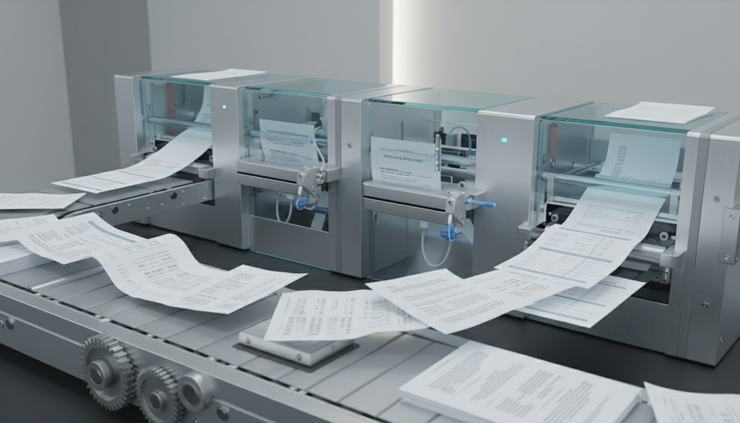
On the workflow side, we focus on redesigning complete processes rather than automating isolated tasks. The entire flow from data capture to financial output is restructured so that information moves seamlessly between customer management systems and accounting software.
AI Accounting Agency workflow automation for modern accounting systems is built around reducing that kind of manual handoff. The goal is to create a cleaner path from the original business activity to the financial output that leaders use to make decisions.
Using artificial intelligence agents for repeatable accounting work
On the automation side, artificial intelligence agents are used for repetitive administrative tasks such as data validation and reconciliation checks.
These tasks are necessary, but they are often time-consuming. A validation check may confirm whether a contract amount matches a billing record. A reconciliation check may compare two sets of records to identify differences that need review. These steps help protect accuracy, but they can slow down a team when they depend entirely on manual effort.
The point is not to remove judgment from accounting. The point is to separate repeatable checking from higher-value review. When automated systems handle the first pass, accounting and operations teams can spend more time looking at investigating issues and improving the process.
We also improve customer support workflows using automated ticket categorization and response routing. When support requests are categorized and routed more consistently, the right information reaches the right team faster. That can reduce delays, lower the chance of missed updates, and help accounting teams work with cleaner inputs.
A sales commission workflow shows the impact
A clear example of the impact our work has had is our Sales Commission Automation Workflow.
Many companies still calculate commissions manually using multiple spreadsheets. A company may manage accounting data in one platform and customer information in another, then rely on spreadsheets to manually combine and manipulate the data.
This creates several risks:
Timing delays
Commission reports may not reflect newly signed contracts right away.
Manual errors
Copying and combining data by hand increases the chance of mistakes.
Limited visibility
Leaders may not see commission costs clearly until after the report is prepared.
Process dependence
The workflow may rely on one person knowing how the spreadsheet works.
We developed a workflow that extracts sales data directly from contracts and organizes it into individual commission reports. As new contracts are signed, commission reports update automatically across the system without manual intervention.
That changes the role of the spreadsheet. Instead of acting as the main engine for the process, manual files become less central. The workflow itself carries the data from contract activity to commission reporting.
The benefit is not only speed. A better commission workflow also creates a more consistent record of how reports are produced. That makes review easier and reduces the need to retrace steps after questions come up.
Connecting financial data with daily operations
The goal of our work is to build systems that connect financial data, sales activity, and operational workflows so that leaders can identify and address issues in real time rather than after the fact.
This is especially useful when accounting information affects daily decisions. Sales commissions, billing changes, customer requests, and contract updates can all affect cash flow, reporting, and team workloads. If these signals arrive late, leaders may only see the problem after it has already created extra work.
The work is practical and process-based. It starts with understanding how information moves today, where manual work appears, and which steps create the most delay or risk. From there, the workflow can be redesigned so that data moves with less rework and more consistency.
Building better systems one workflow at a time
Modern accounting systems do not improve simply because a company adds more software. They improve when the process behind the work becomes clearer, faster, and easier to trust.
AI Accounting Agency focuses on helping companies make that transition, one workflow at a time. That can mean reducing manual spreadsheet work, improving reconciliation checks, connecting contract data to reports, or routing operational information to the right place sooner.
For small and mid-sized businesses, the value is straightforward. Less manual work means fewer avoidable errors. Better-connected systems mean faster visibility. Cleaner workflows mean leaders can act on financial information while it is still current.


Comments